Module 5
Why transition feels destabilising — and why that doesn’t mean you’re failing
*
Why transition feels destabilising — and why that doesn’t mean you’re failing *
IN THIS MODULE
After transition, many people feel a quiet but constant tension:
“I should have a plan by now.”
“I need to know what I’m doing next.”
“Everyone else seems to be moving forward.”
Planning is often treated as proof that you’re coping.
But during transition, traditional planning can increase pressure rather than reduce it.
This module isn’t about fixing your future.
It’s about creating direction that fits your current capacity — not an imagined version of yourself.
WHY PLANNING CAN FEEL OVERWHELMING
In service or structured environments, planning is often:
time-bound
outcome-focused
externally driven
tied to performance
After transition, that same approach can feel heavy or paralysing.
When identity and energy are still stabilising, long-term plans can feel unrealistic — or even threatening.
That doesn’t mean you lack direction.
It means your system is asking for a different kind of plan.
Reflection question
What do I notice in my body or thoughts when I think about “the future”?
Guidance
Research into decision-making during periods of change shows that uncertainty increases cognitive load.
When capacity is limited, the brain prioritises safety over strategy.
This is why planning too far ahead can feel exhausting rather than motivating.
Pause.
Take one slow breath out.
Nothing needs to be solved here.
A Gentle Pause
There’s no rush here. You don’t need answers yet. This module is about seeing more clearly what’s happening inside you right now.
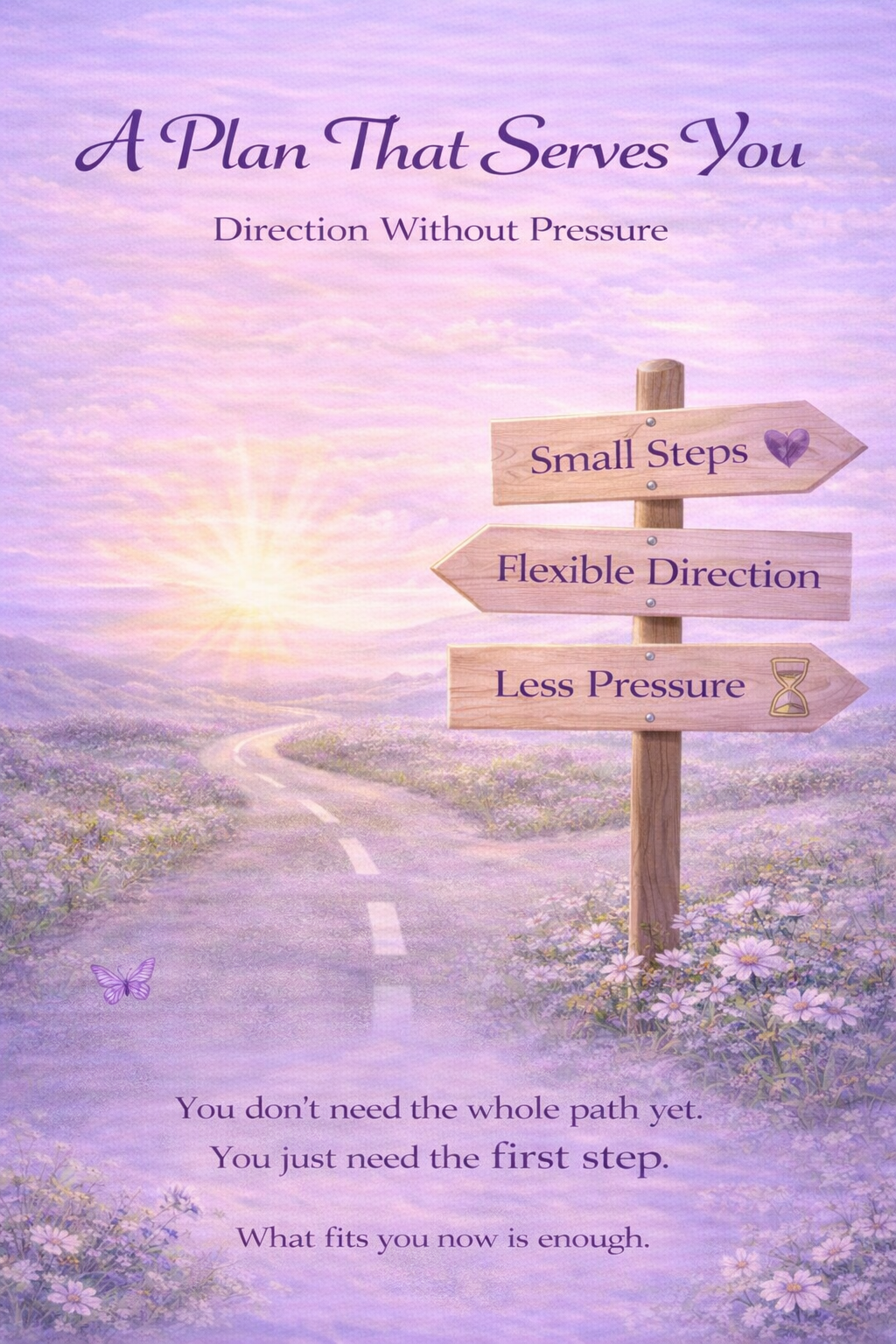
A DIFFERENT KIND OF PLAN
A plan that serves you during transition is:
flexible
short-horizon
responsive to capacity
adjustable without judgement
It’s not about where you’ll be in five years.
It’s about what’s manageable now.
Reflection question
What does “enough for now” look like in my life?
Guidance
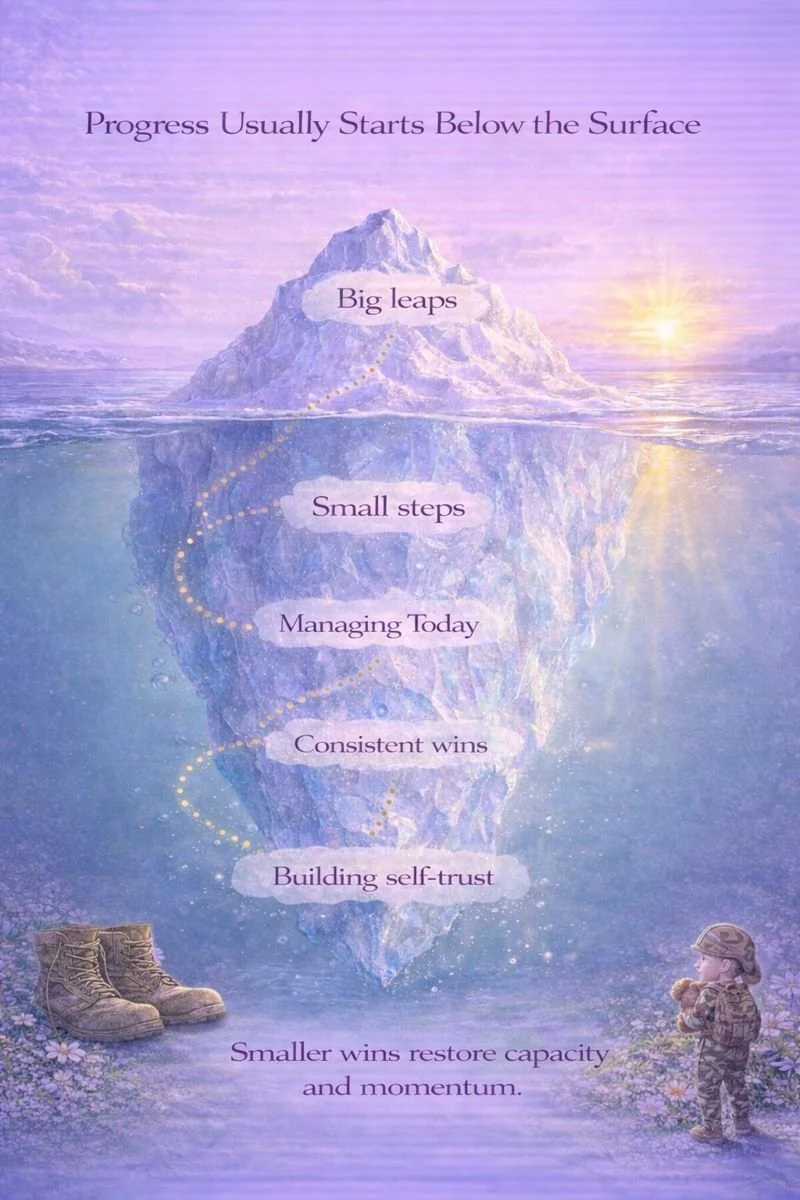
Psychological research on adaptive planning shows that shorter planning horizons reduce anxiety and increase follow-through.
Direction becomes clearer when the nervous system feels steadier.
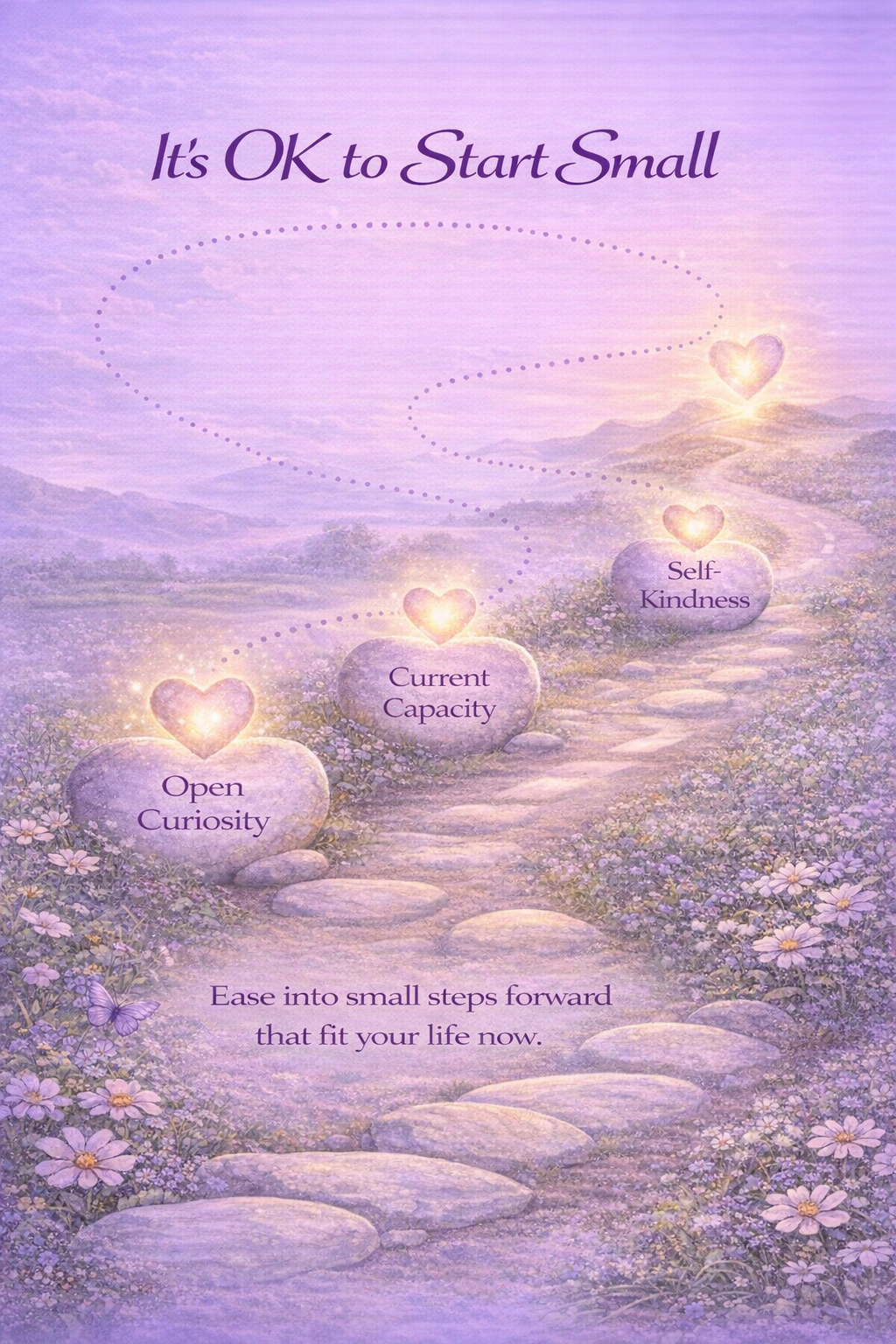
Small, realistic steps rebuild trust far more effectively than ambitious plans made under pressure.
Pause.
Let that land.
Reflection prompts
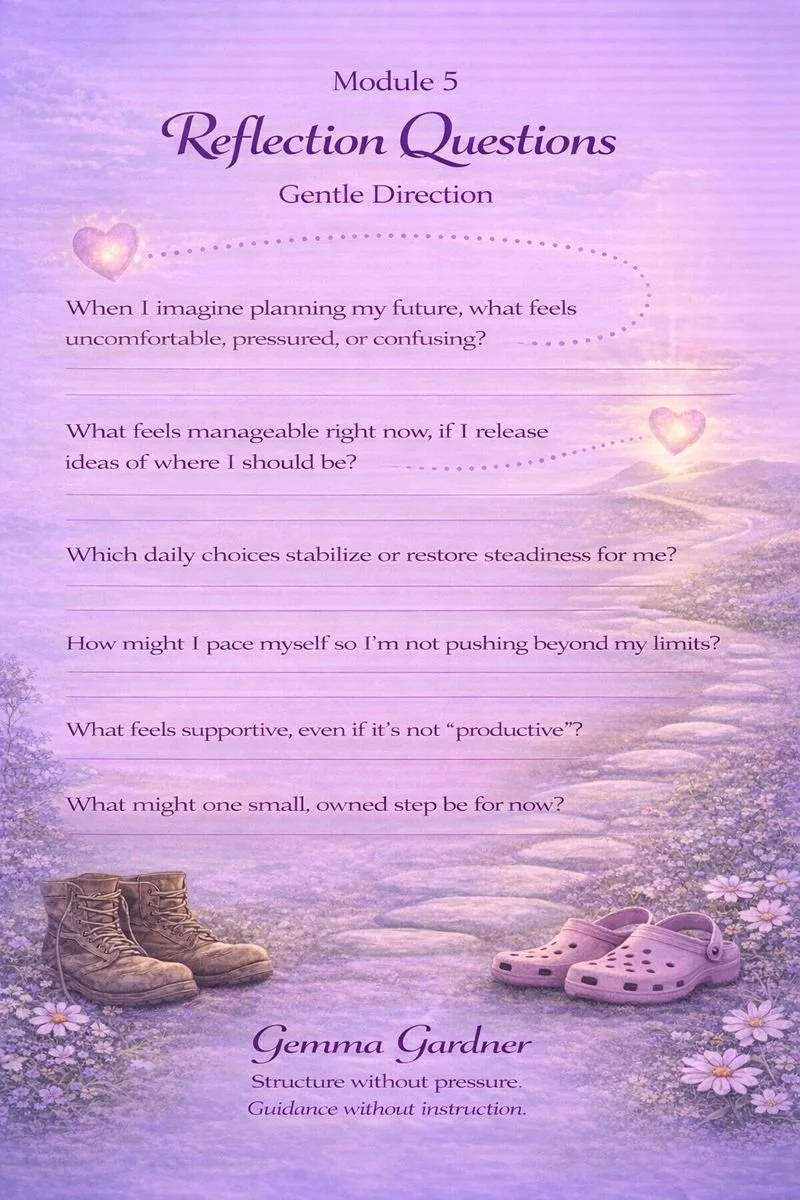
What feels genuinely manageable over the next few weeks?
Where am I expecting myself to perform rather than stabilise?
What would ease pressure rather than add to it?
CAPACITY BEFORE AMBITION
Ambition often returns later — once capacity has been restored.
Trying to plan from exhaustion can create plans that don’t fit, leading to frustration or self-criticism when they’re not followed.
This isn’t a motivation problem.
It’s a timing issue.
Reflection question
Where might I be pushing for progress before there’s enough steadiness?
Guidance
Research on burnout and recovery shows that sustainable progress follows restoration, not force.
Capacity creates clarity — not the other way around.
You are not falling behind.
You are recalibrating.
Pause here if needed.
Reflection prompts
What signals tell me I’m close to overload?
What helps me feel grounded enough to think clearly?
What pace feels respectful to where I am now?
DIRECTION WITHOUT PRESSURE
Direction doesn’t need to be loud or decisive.
Sometimes it looks like:
narrowing options rather than choosing one
holding space rather than committing
saying “not yet” instead of “never”
This is still movement.
Reflection question
What am I allowed to leave undecided for now?
Guidance
Decision-making research shows that postponing decisions intentionally — rather than avoiding them — preserves cognitive resources and reduces regret.
Waiting is not weakness when it’s conscious.
You’re allowed to move at a pace that fits your life.
Reflection prompts
What decisions can wait without consequence?
What decisions feel urgent only because of expectation?
What feels quietly right, even if it’s not fully formed?
SCIENTIFIC GROUNDING
Studies on adaptive planning and self-regulation show that people make better long-term decisions when short-term stability is prioritised.
Confidence grows from consistency — not certainty.
A plan that serves you now will change as you do.
That’s not failure.
That’s responsiveness.
****
PAUSE
Pause here.
You don’t need a finished plan.
You don’t need clarity yet.
Take one slow breath in.
Breathe out gently.
You are not behind.
You are building something that fits.
In the next module, we’ll look at making things happen gently — rebuilding trust through small, owned actions rather than force.
You can continue when it feels right.