Module 1
Why transition feels destabilising — and why that doesn’t mean you’re failing
*
Why transition feels destabilising — and why that doesn’t mean you’re failing *
IN THIS MODULE
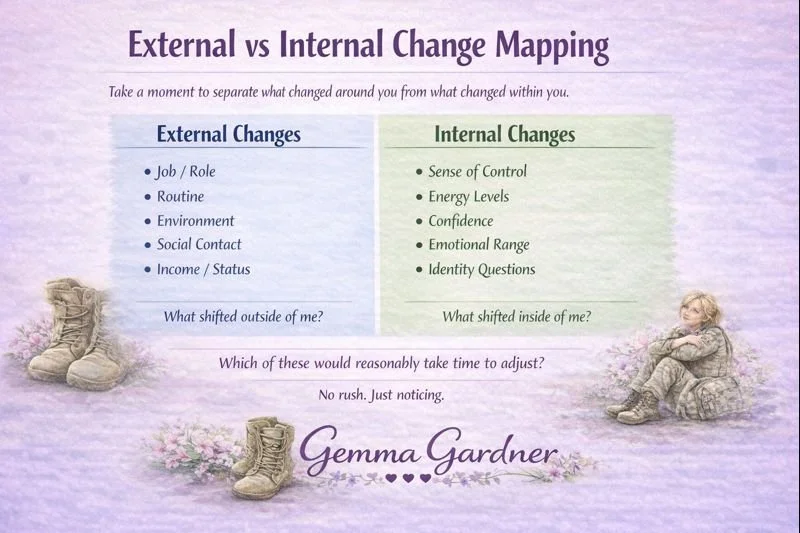
If you’re reading this, there’s a good chance life feels like it’s changed on the outside — yet the inside hasn’t quite caught up.
Transition isn’t a problem to solve, it’s a process to navigate. Here, we start by grounding what you’re experiencing so the pressure and noise around it can ease.
What Actually Feels Disrupted
Service or structured life gives us more than a role — it gives routine, identity, purpose, language, and familiarity. When those shift or disappear, unease is expected rather than exceptional.
Why This Feels Personal
You might find yourself thinking “I should be fine by now” — but internal adaptation always lags behind external change. That mismatch can create confusion, not failure.
A Gentle Pause
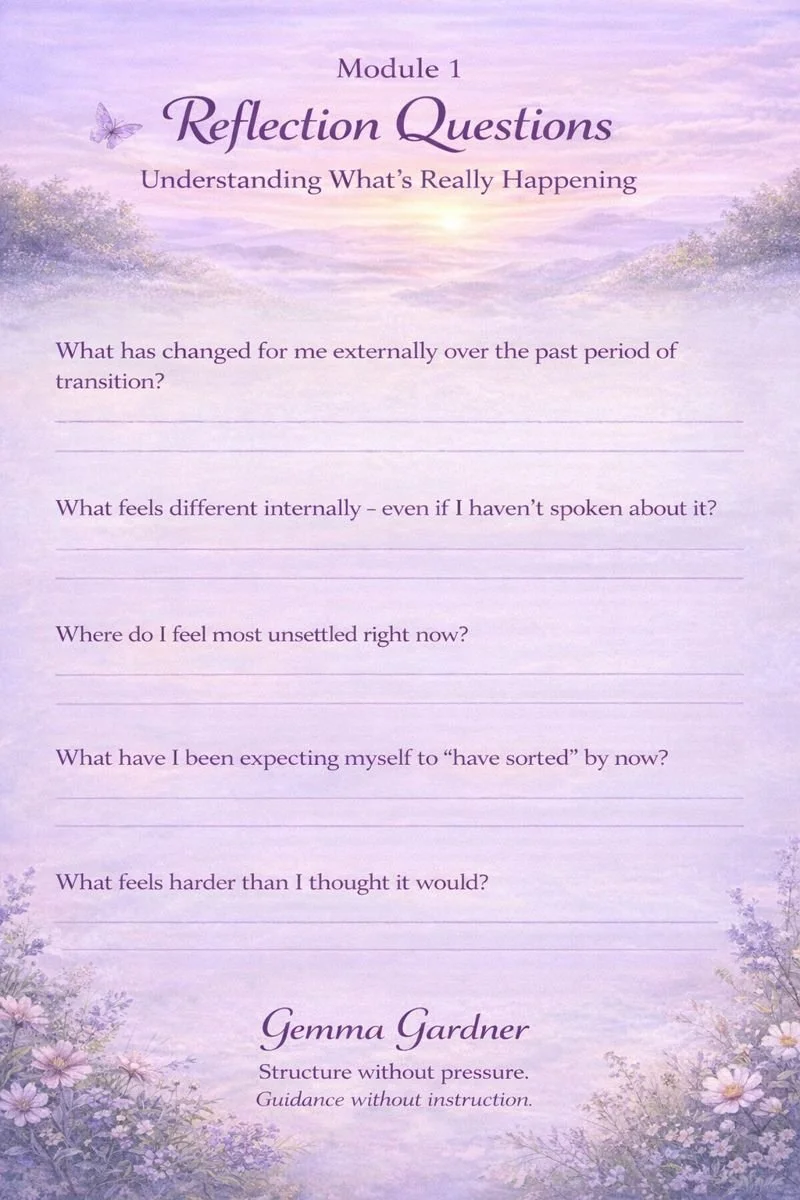
There’s no rush here. You don’t need answers yet. This module is about seeing more clearly what’s happening inside you right now.
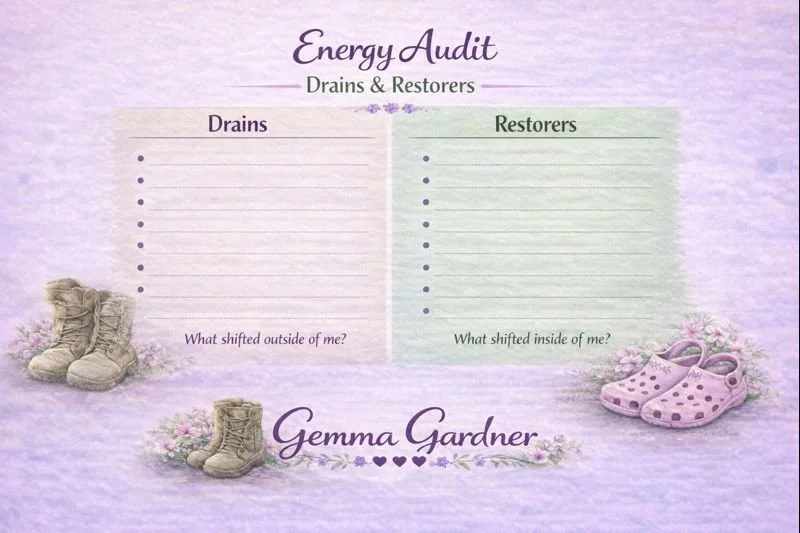
You’re welcome to use the space below to notice what has shifted. That’s all. No pressure, no outcomes.
What research tells us about transition is that:
identity changes gradually
nervous-system regulation follows external changes slowly
emotional responses often appear after the transition point
families also experience adjustment
This means unsettled feelings are normal, common, and expected — not a sign you’re failing.
Transition affects relationships too. Loved ones may notice shifts in mood, energy, or availability before you do. Understanding this helps reduce pressure on everyone.
****
Before moving on, pause here.
You don’t need clarity yet.
You don’t need a plan yet.
***
Understanding comes first — and that alone changes how this feels.
When you’re ready, the next module explores Energy — not motivation or goals, but capacity. Direction becomes clearer once there’s enough steadiness to think