
The Phoenix Leadership Series
52 Principles for Stable Leadership
Leadership is often portrayed as confidence, charisma, or authority.
In reality, leadership is far quieter.
It is built through daily discipline, internal stability, and the ability to think clearly under pressure.
The Phoenix Leadership Series is a year-long exploration of the principles that sustain leadership over time.
Each reflection examines one behavioural discipline that strengthens identity, responsibility, and clarity in demanding environments.
These are not motivational ideas.
They are practical principles drawn from lived leadership experience, behavioural observation, and the philosophy that leadership must begin with internal regulation before external influence.
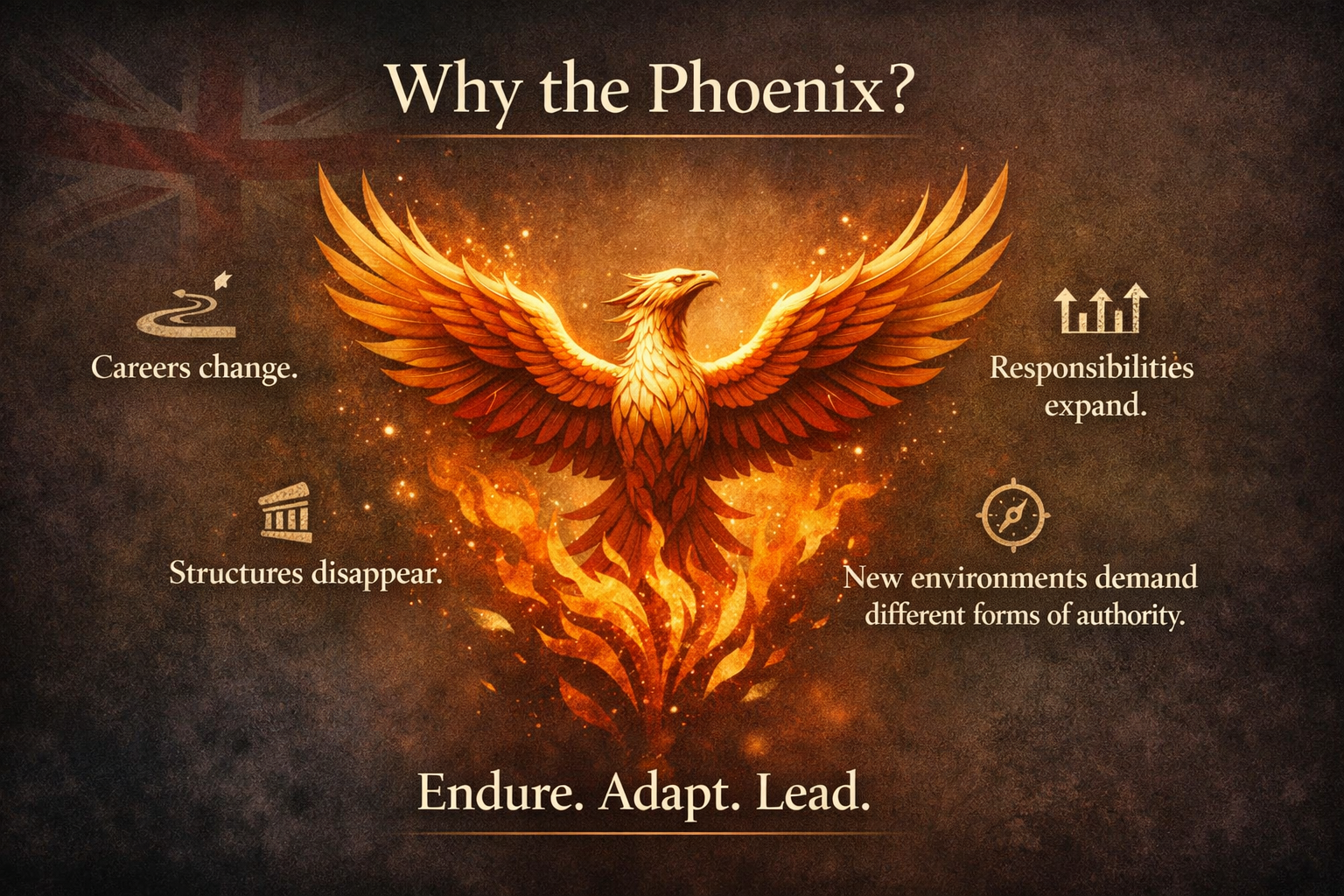
WHY THE PHOENIX?
The phoenix is a symbol often associated with reinvention.
But in leadership, reinvention alone is rarely enough.
The phoenix also represents endurance — the ability to rebuild identity, clarity, and direction after disruption.
Leadership is rarely a straight path.
Careers change.
Responsibilities expand.
Structures disappear.
New environments demand different forms of authority.
The Phoenix Leadership Series explores the behavioural principles that help individuals stabilise themselves during these moments.
Because leadership is rarely defined by moments of success.
It is defined by how individuals respond to disruption.
The Phoenix Leadership Series explores 52 leadership principles, organised into four phases of development.
Each phase builds upon the previous one.
The goal is not inspiration.
The goal is discipline, reflection, and behavioural awareness.
PART I — FOUNDATIONS OF CONTROL
(Principles 1–13)
Leadership begins with internal control.
Before influencing others, leaders must first stabilise their own thinking, emotional responses, and behavioural discipline.
Principles in this section explore:
• Control the Controllable
• Pause Before Reaction
• Quiet Confidence
• One Small Anchor
• Stabilise Before Solving
• Boundaries
• Discipline
• Slow Thinking
• Direction Before Speed
• Emotional Regulation
• Self Responsibility
• Long-Term Thinking
• Inner Stability
These principles focus on the internal foundations that allow leadership to remain steady under pressure.
PART II — IDENTITY & RESPONSIBILITY
(Principles 14–26)
As responsibility increases, leadership becomes less about individual performance and more about identity stability.
This phase examines how leaders navigate expectations, accountability, and authority.
Themes explored include:
• Responsibility Expansion
• Identity Under Pressure
• Standards Without Supervision
• Authority Without Ego
• Integrity in Small Decisions
• Accountability to Self
• The Weight of Leadership
This stage explores the behavioural realities of responsibility.
PART III — LEADERSHIP IN PRACTICE
(Principles 27–39)
Leadership becomes most visible in action.
In this phase the series explores real-world leadership behaviour.
Principles include:
• Decision Discipline
• Clarity Under Pressure
• Strategic Patience
• Communication Precision
• Consistency of Standards
• Leading Without Noise
• Emotional Containment
These reflections explore how leaders translate internal stability into effective leadership behaviour.
PART IV — LONG-HORIZON THINKING
(Principles 40–52)
The final stage explores leadership across longer time horizons.
Leadership is not simply about immediate results.
It is about building something that remains steady over time.
Themes explored include:
• Legacy Thinking
• Vision Anchored in Discipline
• Responsibility Beyond Self
• Patience in Leadership
• Quiet Authority
• Leadership Maturity
This final stage reflects the transition from reactive leadership to durable leadership.
RELATIONSHIP TO THE AURIS FRAMEWORK
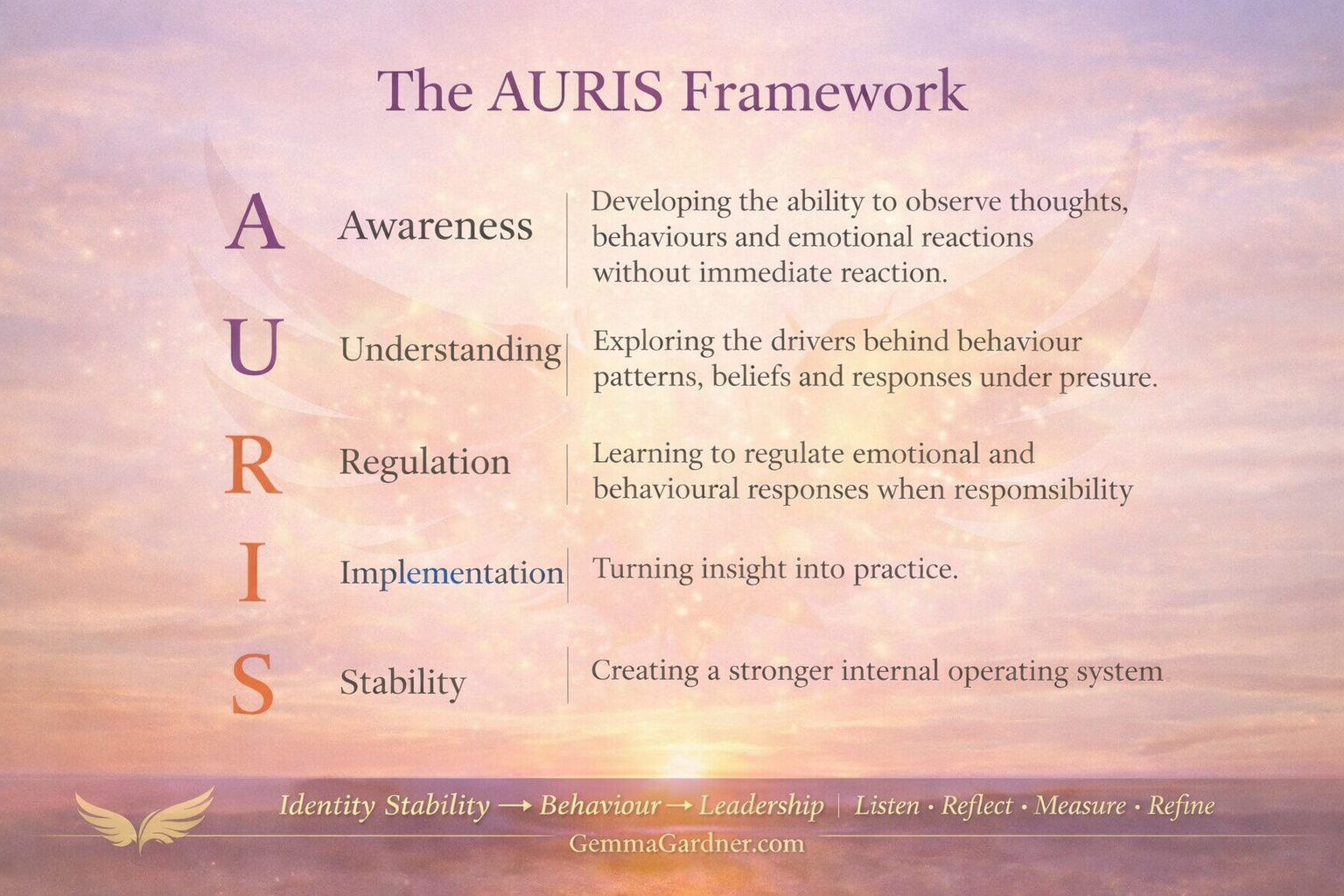
The Phoenix Leadership Series is closely connected to the AURIS Leadership Framework.
Each reflection explores behavioural principles that support the five stages of AURIS:
Awareness
Understanding
Regulation
Integration
Stability
Together they form a practical exploration of how identity stability supports leadership effectiveness.
WHERE TO READ THE SERIES
New reflections are published regularly through Field Notes, alongside ongoing leadership observations and research insights.
These writings form part of an evolving body of work exploring identity, leadership, and behavioural discipline.
Read Research Notes
Leadership rarely fails because of a lack of intelligence.
It fails when pressure destabilises identity.
The purpose of this series is simple:
To help leaders stabilise themselves first.
Because when identity remains steady, leadership decisions become far clearer.
“You have power over your mind — not outside events.
Realise this, and you will find strength.”
— Marcus Aurelius